Don’t Let the Insurance Company Use Partial Fault to Deny You the Compensation You Deserve
You were in a car accident. Maybe you were going a few miles over the speed limit. Maybe you changed lanes a second too late. Maybe you’re not even sure what you did wrong, but the other driver, or their insurance company, is already pointing fingers at you. Now you’re wondering: if I was partly to blame, do I still have a right to file a claim and get compensated for my injuries?
The answer is very likely yes. But how much you can recover depends on where you live and how fault is divided. Here’s what you need to know.
Fault Is Rarely 100% One Person’s Responsibility
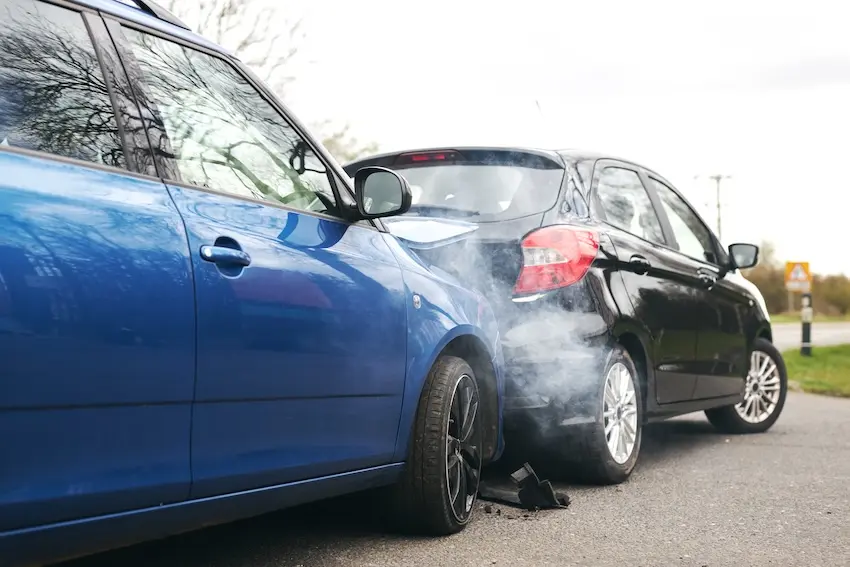
In the real world, most car accidents involve some degree of shared responsibility. One driver may have been speeding while the other ran a yellow light. A distracted driver may have drifted into a lane that another driver was already merging into. Insurance companies and courts understand this, which is why most states have legal frameworks specifically designed to handle shared fault situations.
The fact that you contributed to the accident does not automatically eliminate your right to compensation. What it may do is reduce the amount you receive, and the rules around that reduction vary significantly from state to state.
How Shared Fault Rules Work: Comparative vs. Contributory Negligence
There are two main legal frameworks that govern partial fault claims. Understanding which one applies in your state is critical before you take any action.
Pure Comparative Negligence
In states that follow pure comparative negligence, you can recover compensation no matter how much of the accident was your fault, even if you were 99% responsible. Your recovery is simply reduced by your percentage of fault. If a court determines your damages are worth $100,000 but you were 40% at fault, you would recover $60,000. Missouri follows pure comparative negligence, which means car accident victims in Kansas City and St. Louis can still pursue a claim even when they share significant responsibility for the crash.
Modified Comparative Negligence
Most states use a modified version of comparative negligence. Under this framework, you can recover compensation only if your share of fault falls below a certain threshold, typically 50% or 51%. If you are found to be equally or more at fault than the other party, you are barred from recovery. Kansas follows the 50% bar rule, meaning Kansas City accident victims on the Kansas side of the state line need to be aware that crossing the fault threshold eliminates their claim entirely.
Contributory Negligence
A small number of states still follow contributory negligence, the harshest standard of all. Under this rule, if you are found even 1% at fault, you cannot recover anything. Missouri and Kansas are not contributory negligence states, but it is worth knowing this rule exists if you were injured in an accident while traveling.

Why Insurance Companies Use Partial Fault Against You
Here is something important to understand: insurance adjusters are trained to find reasons to assign you fault. The more fault they can shift onto you, the less they have to pay. This is not a coincidence; it is a strategy.
After a car accident, an adjuster may review the police report, your recorded statement, photos of the scene, and witness accounts, looking for anything that suggests you contributed to the crash. Something as simple as admitting you were distracted or saying “I’m sorry” at the scene can be used to increase your assigned percentage of fault.
This is exactly why you should never give a recorded statement to the other driver’s insurance company without first speaking to an attorney, and why having the right legal representation matters so much in partial fault cases.
What Evidence Can Help Reduce Your Fault Percentage
Your assigned fault percentage is not set in stone. A skilled car accident attorney can challenge the insurance company’s fault assessment using evidence that tells a more complete picture of what happened. Useful evidence in partial fault cases includes traffic camera or dashcam footage, accident reconstruction analysis, witness statements that contradict the adjuster’s version of events, cell phone records showing the other driver was distracted, and vehicle inspection data that reveals mechanical failure or unsafe conditions.
The stronger your evidence, the more leverage your attorney has to negotiate a fault percentage that accurately reflects the situation, and the more compensation you stand to recover.
You May Still Need Medical Care Regardless of Fault
One thing partial fault does not change is your need for immediate medical attention. Many car accident injuries, including whiplash, soft tissue damage, and concussions, are not immediately obvious. Delaying treatment not only puts your health at risk but also gives insurance companies grounds to argue that your injuries were not caused by the accident at all.
Getting seen by a car accident doctor right away creates the medical documentation your attorney needs to build a strong claim, regardless of how fault is ultimately divided.

Not Sure Where to Start? CALLMAA Can Help.
If you were involved in a car accident in Kansas City or St. Louis and you’re worried that partial fault might disqualify your claim, don’t assume the worst before speaking with someone who knows the law. At CALLMAA, we connect accident victims with experienced car accident lawyers who understand Missouri and Kansas fault rules and know how to fight back against unfair fault assignments.
We also connect you with car accident doctors who can evaluate and document your injuries from day one, which is critical for any claim, especially a partial fault one. And if your vehicle was damaged, our auto care network can help you get back on the road.
One call handles all of it. Contact CALLMAA today or call 833-847-1622 for a free consultation. Partial fault does not mean no recovery, but it does mean you need the right team in your corner from the start.